How to Identify a Screw or Bolt Size
A screw’s size is just two numbers — diameter and length. Measure them with our free on-screen millimeter ruler and you will know exactly what to buy.
Screws and bolts are sold by diameter × length, both in millimeters for metric hardware. Once you can measure those two numbers, labels like M6 × 30 stop being cryptic — that is simply a 6 mm diameter, 30 mm long screw.
Method 1: Measure diameter and length
- Diameter: lay the screw sideways and read the widest point of the threads with the on-screen millimeter ruler (calibrate first). Measure the threads, not the shank — the threads define the size.
- Length: for most screws (round, pan, hex heads) measure from under the head to the tip. For flat countersunk heads, which sit flush, measure the total length including the head.
- Round each reading to the nearest whole millimeter — metric screws come in whole-mm diameters.
Method 2: Match against a known screw
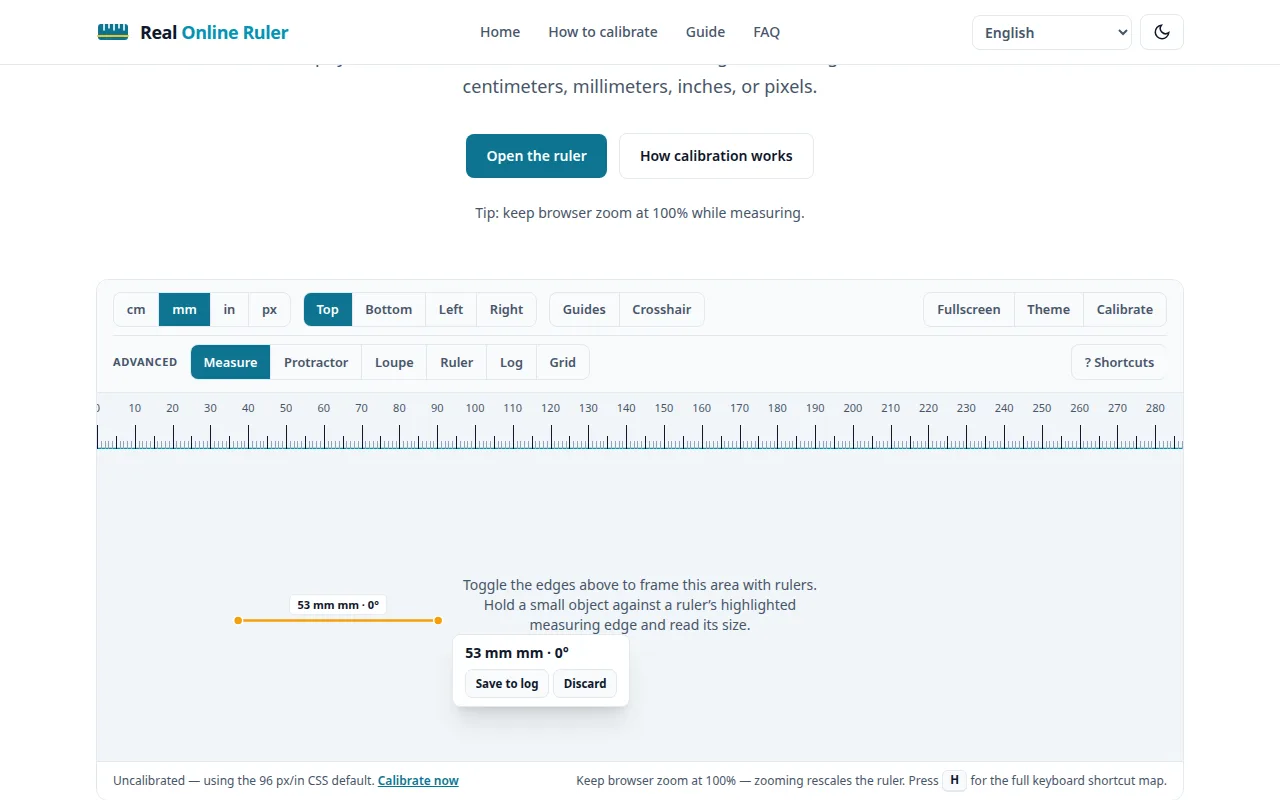
If you have one screw of known size, lay the mystery screw beside it with the threads aligned and compare both against the calibrated mm ruler. Matching diameter and length means you have found your size — no label decoding needed.
Reading metric labels: what M6 × 30 means
Metric screws follow the ISO format M[diameter] × [length], both in millimeters:
| Label | Diameter | Length |
|---|---|---|
| M4 × 16 | 4 mm | 16 mm |
| M5 × 20 | 5 mm | 20 mm |
| M6 × 30 | 6 mm | 30 mm |
| M8 × 40 | 8 mm | 40 mm |
The M just means metric. Common small-project sizes are M4, M5, M6, and M8. If a label instead shows a # number (like #8 × 1"), that is imperial hardware — this guide covers metric, which is standard for furniture, electronics, and most modern kits.
The honest limit: thread pitch
Diameter and length are what you need to buy a replacement in most cases — but screws also have a thread pitch (the distance between threads). Coarse and fine threads of the same diameter are not interchangeable in a tapped hole. Pitch is hard to measure by eye; a thread gauge (a few dollars at any hardware store) identifies it in seconds. If a replacement binds or feels loose, pitch mismatch is the likely cause.
Tips for an accurate reading
- Measure across the threads at their widest — that is the nominal diameter.
- Clean rust and debris off before measuring.
- For length, be consistent: under-the-head for raised heads, total length for flat heads.
- Zoom the page to 100% so the on-screen ruler reads true.
- When in doubt, bring the old screw to the store and test it in the sizer holes.
Try it on your screen right now
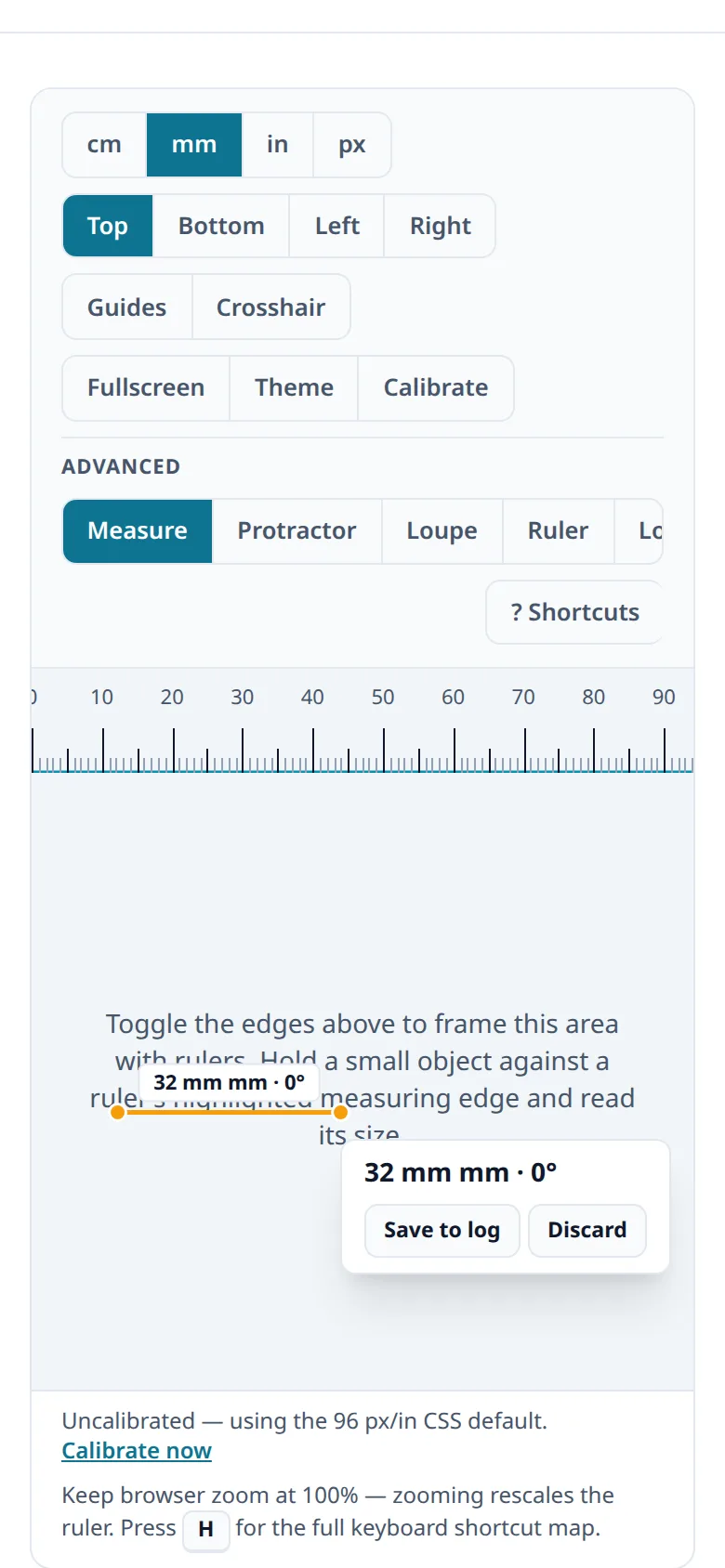
The live ruler is on the home page — calibrated to your display in under a minute.
Open the ruler