How to Measure a Box for Shipping
Carriers charge by size as well as weight, and one wrong number can turn a cheap shipment into a surcharge. Here is exactly what to measure, in what order, and how to check the carrier limits before you book the label.
Every carrier — UPS, FedEx, USPS — prices a parcel from the same three numbers: length, width, and height of the packed, sealed box. Get them right and you pay the quoted price; get them wrong and dimensional-weight pricing or an oversize surcharge corrects it for you, at your expense.
What carriers actually measure
Carriers use one convention worldwide for a rectangular box: length is the longest side, width is the side perpendicular to the length, and height is whatever is left. Always measure the outside of the finished box — flaps taped, bulges included. A box that bulges 1 inch past your measurement is 1 inch bigger in the carrier system.
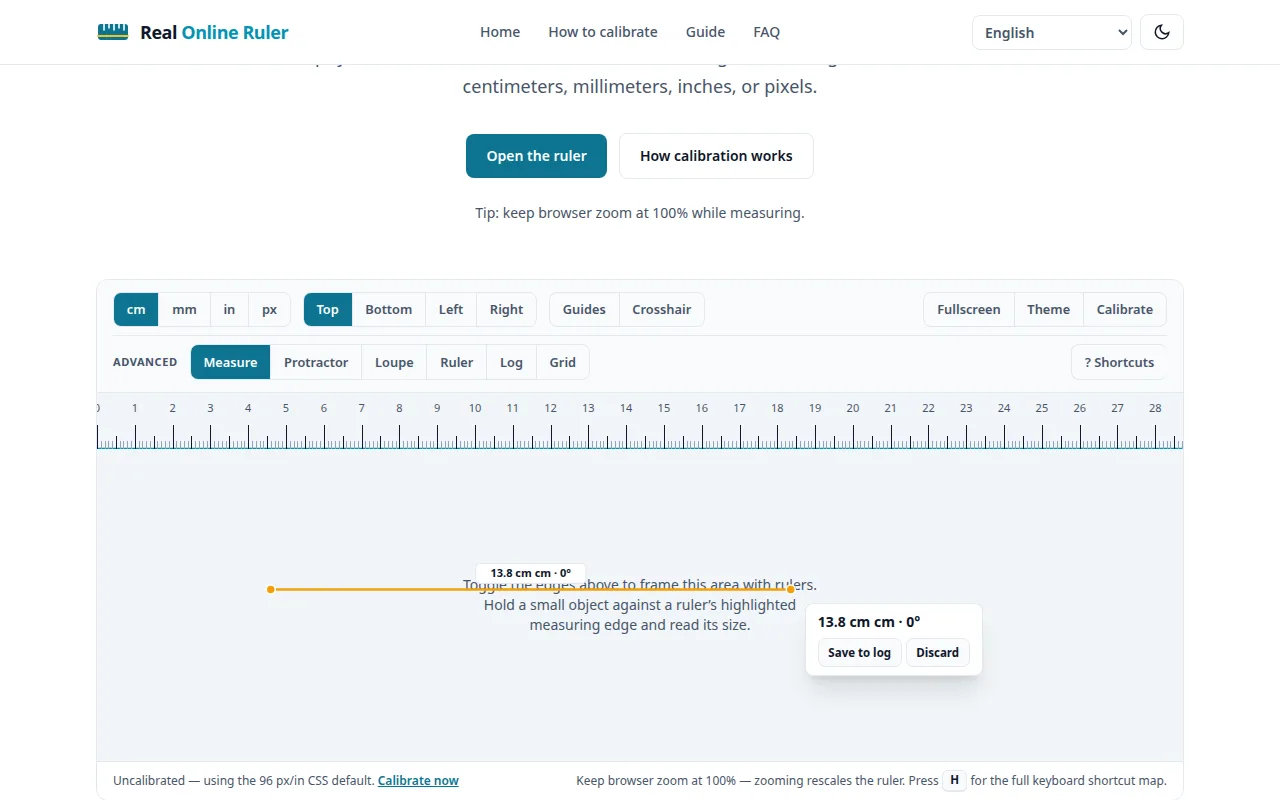
Method 1: Length x width x height
- Seal the box first. Pack it, tape it, then measure. Carriers handle the finished parcel, not your plan for it.
- Length: the longest side, end to end.
- Width: the shorter horizontal side, at right angles to the length.
- Height: table to top of the box. Measure bulges at their widest point.
- Record as L x W x H in the unit your carrier form asks for — inches for US carriers, e.g. 16 x 12 x 10 in.
Method 2: Girth, for the carrier size limits
Carriers also check length + girth — the "total size" of your parcel. Girth is the distance around the thickest part of the box: (2 x width) + (2 x height). Add the length to get the number the size-limit tables use.
| Carrier | Max length | Max length + girth |
|---|---|---|
| UPS / FedEx | 108 in | 165 in |
| USPS | — | 130 in |
Example: a 16 x 12 x 10 in box has a girth of (2 x 12) + (2 x 10) = 44 in, so length + girth = 60 in — comfortably inside every limit above. Cross a limit and the parcel stops being a parcel: it becomes freight, or you split the shipment. (Limits change; confirm on the carrier site before shipping anything close to the edge.)
Mistakes that cost money
- Measuring the inside of the box or the item instead of the sealed parcel.
- Ignoring bulges — measure the widest point, not the box as designed.
- Mixing units — US carrier forms want inches; a cm number entered as inches under-reports badly.
- Rounding down. Carriers round up; UPS and FedEx round fractional inches up to the next whole inch for dimensional pricing.
- Forgetting dimensional weight: carriers bill whichever is greater, actual weight or dimensional weight — a big light box can cost more than a small heavy one.
Try it on your screen right now
The live ruler is on the home page — calibrated to your display in under a minute.
Open the ruler